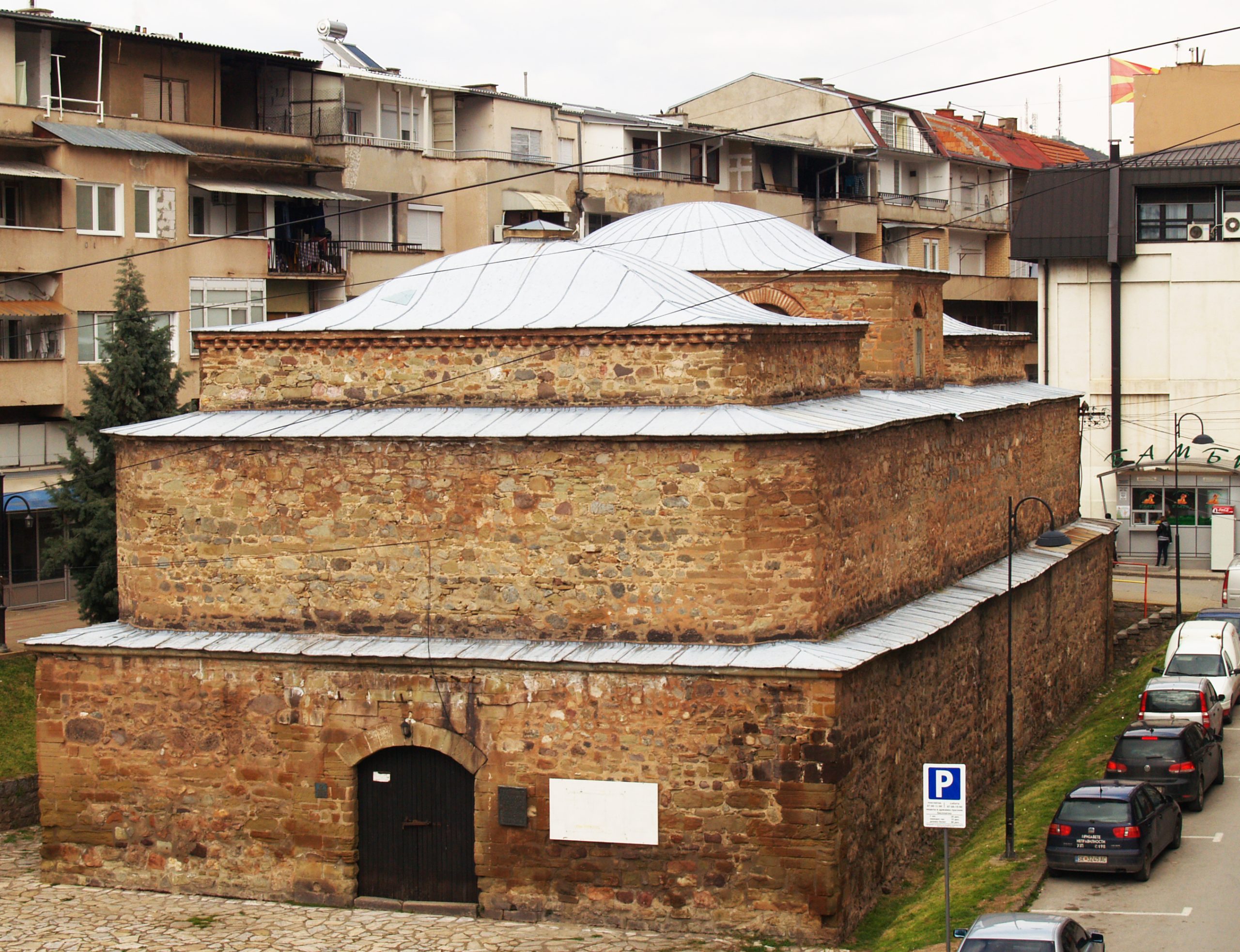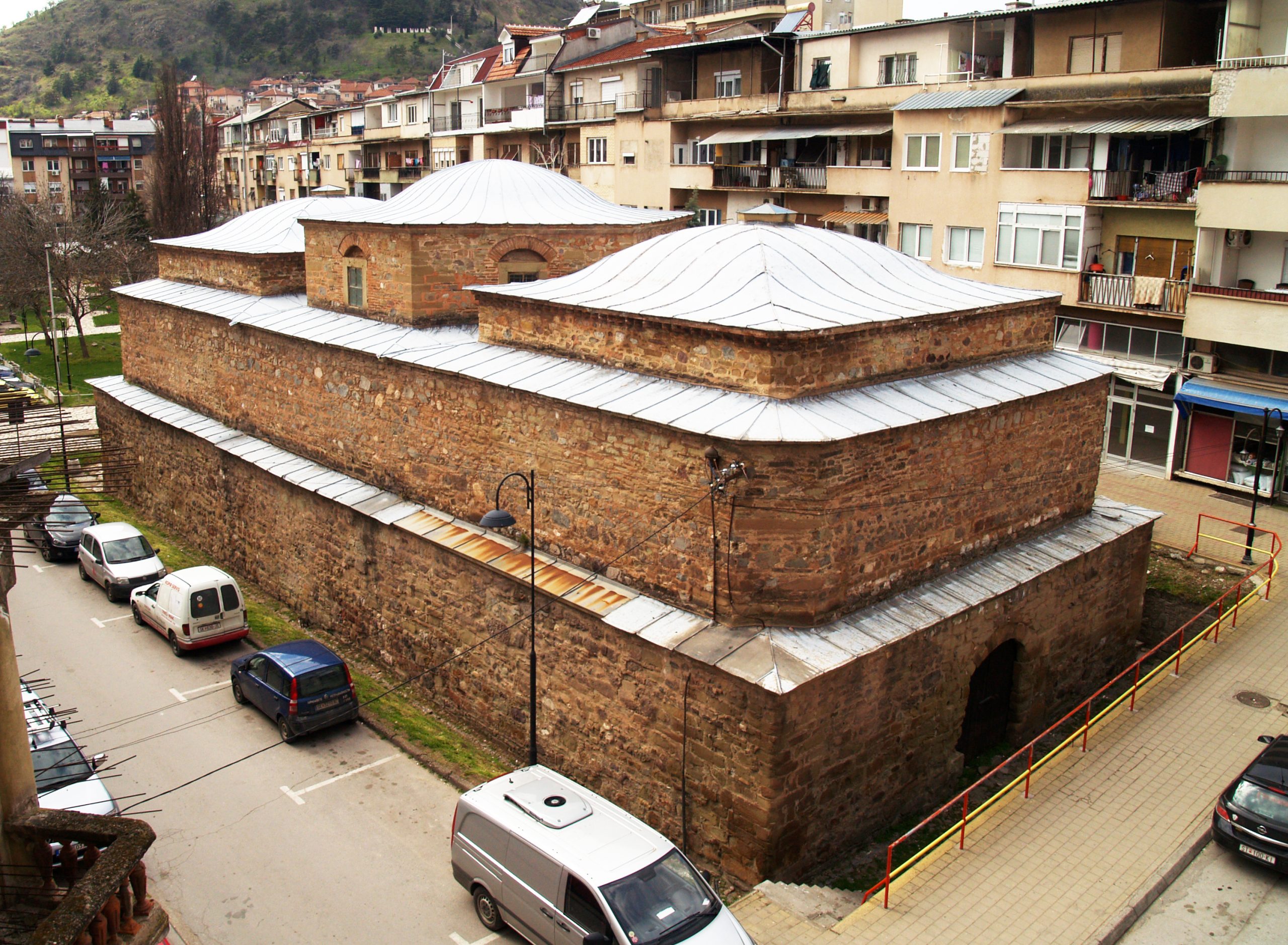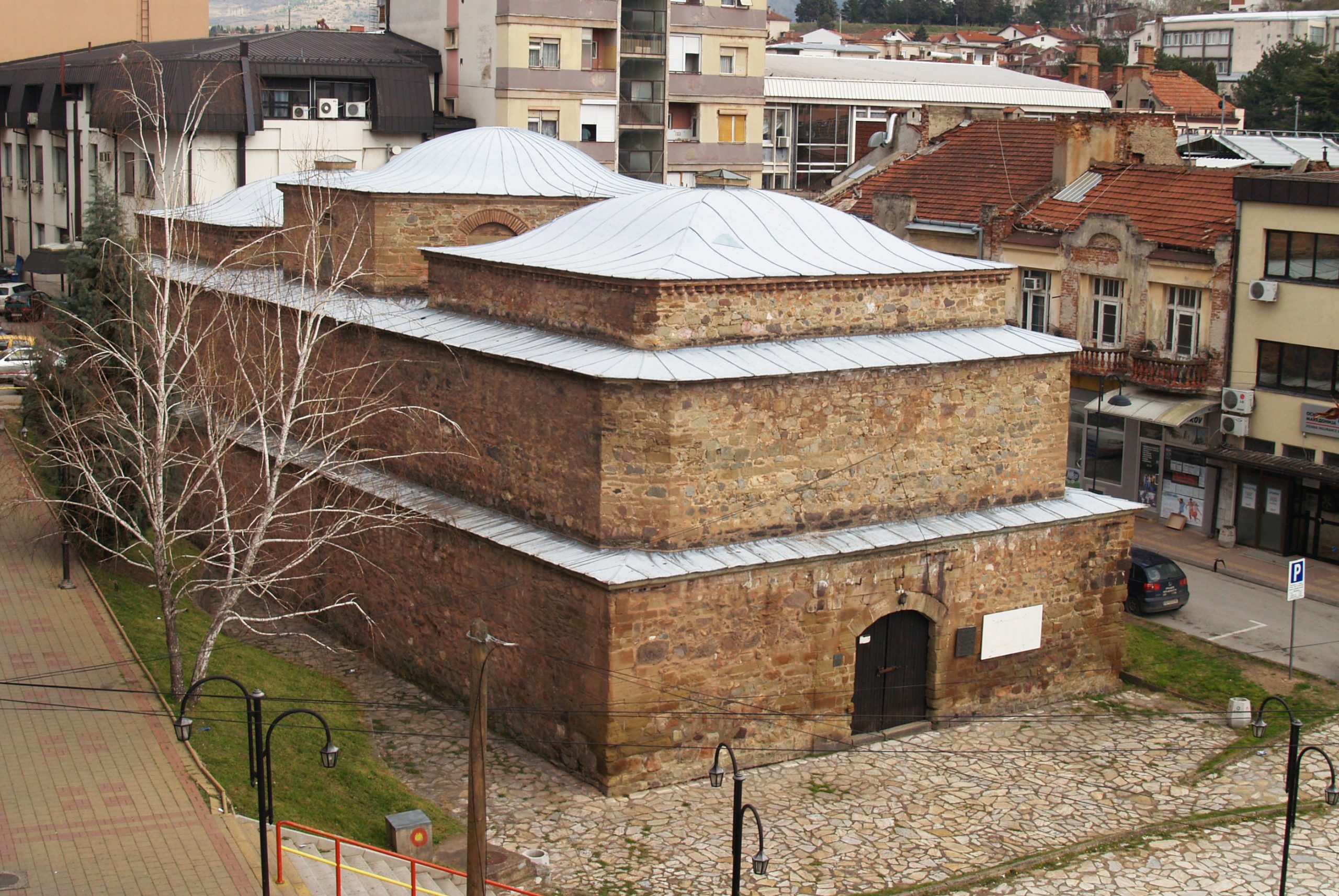
The Bezisten is located on the right bank of the Otinja River, in the central part of the city
The Bezisten has a rectangular ground plan and represents a single interior space, internally divided into three parts by a central column that carries two pointed arches. In this way, three bays are formed, of which the central bay is vaulted with a pseudo-dome, octagonal on the exterior, while inside the calotte rests on trompes. The other two bays are vaulted with cross domes.
The structural system of the building is massive, with two longitudinal and two transverse walls with a thickness of 1.72 m, lightened by niches that end in a pointed arch, 0.76 m deep and 1.5 m wide. In plan, the external dimensions of the building are 39.96 × 14.12 m, and it is designed longitudinally as a single space divided into three bays. The entrances are placed on the eastern and western sides, longitudinally, while the originally pierced southern entrance was later rebuilt. Above the entrance doors, segmental arches of precisely dressed stone—sandstone and basalt—are executed.
The building is constructed of dressed stone on the interior side, and on the exterior of dressed stone (sandstone) and rubble stone, with only the corner blocks, the wreath, and the portal frames made of dressed and dressed stone. The wall faces are executed of rubble stone and crushed stone. The drum courses (the arches externally) are executed of rubble brick—in the form of a saw-tooth course.
The roof-bearing structure consists of a dome built above the central space and two cross vaults above the end spaces. The height of the dome is greater than the height of the cross vaults, which are supported externally by two stone pointed arches at a span of 5.0 m and bear the weight of the superstructure, as well as one quarter of the load from the cross vaults and the dome.
The dome above the central bay is supported on trompes, built of baked brick with lime mortar, with a central angle of 180°, an internal radius of 4.4 m, and a thickness of 0.5 m. Before the first conservation works (1961–1964), the Bezisten was covered with stone slabs and partially with tiles.
The Bezisten is poorly lit. Zenital lighting illuminates the end bays, while the central bay is lit by six windows placed in the dome itself.