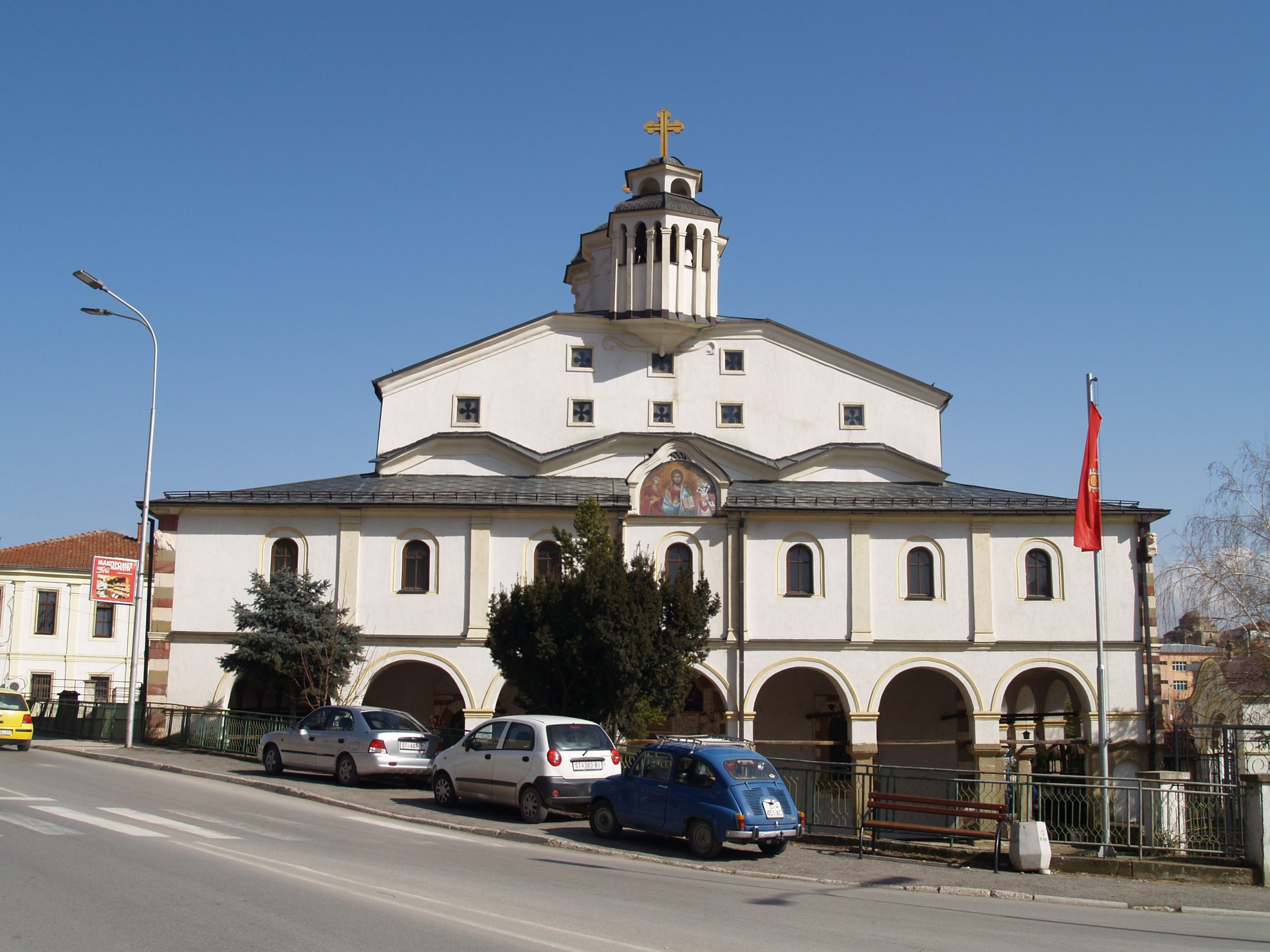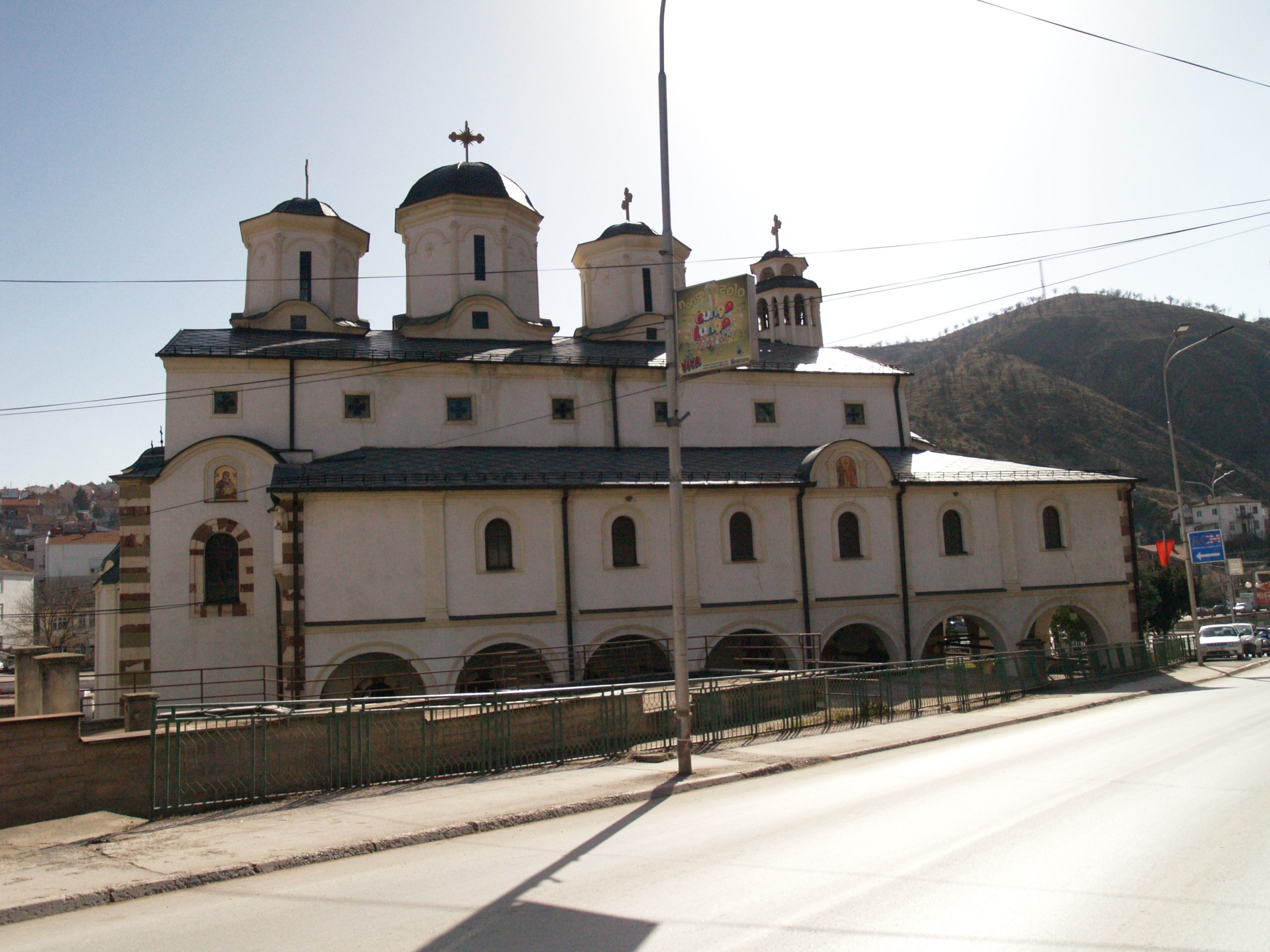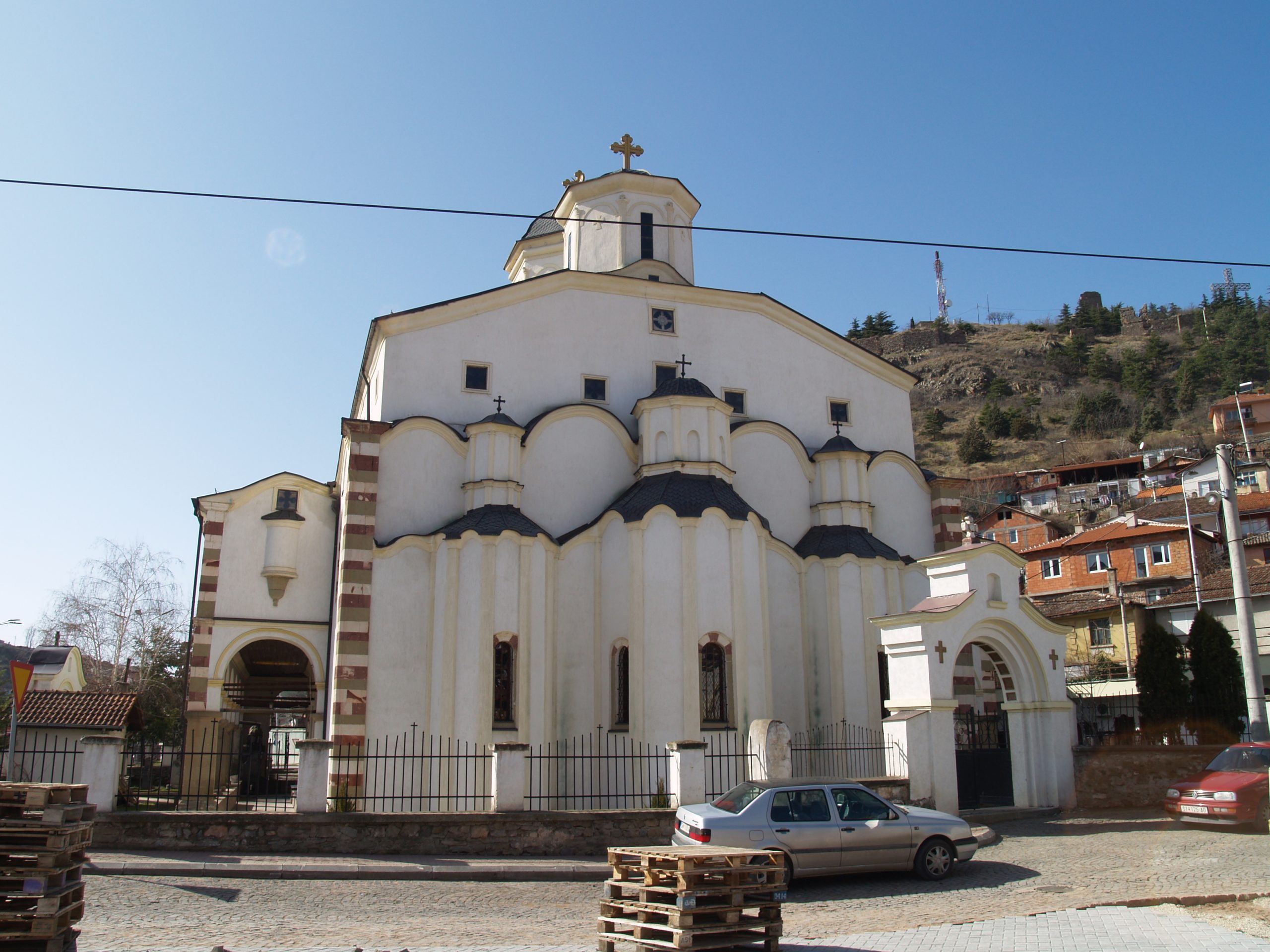
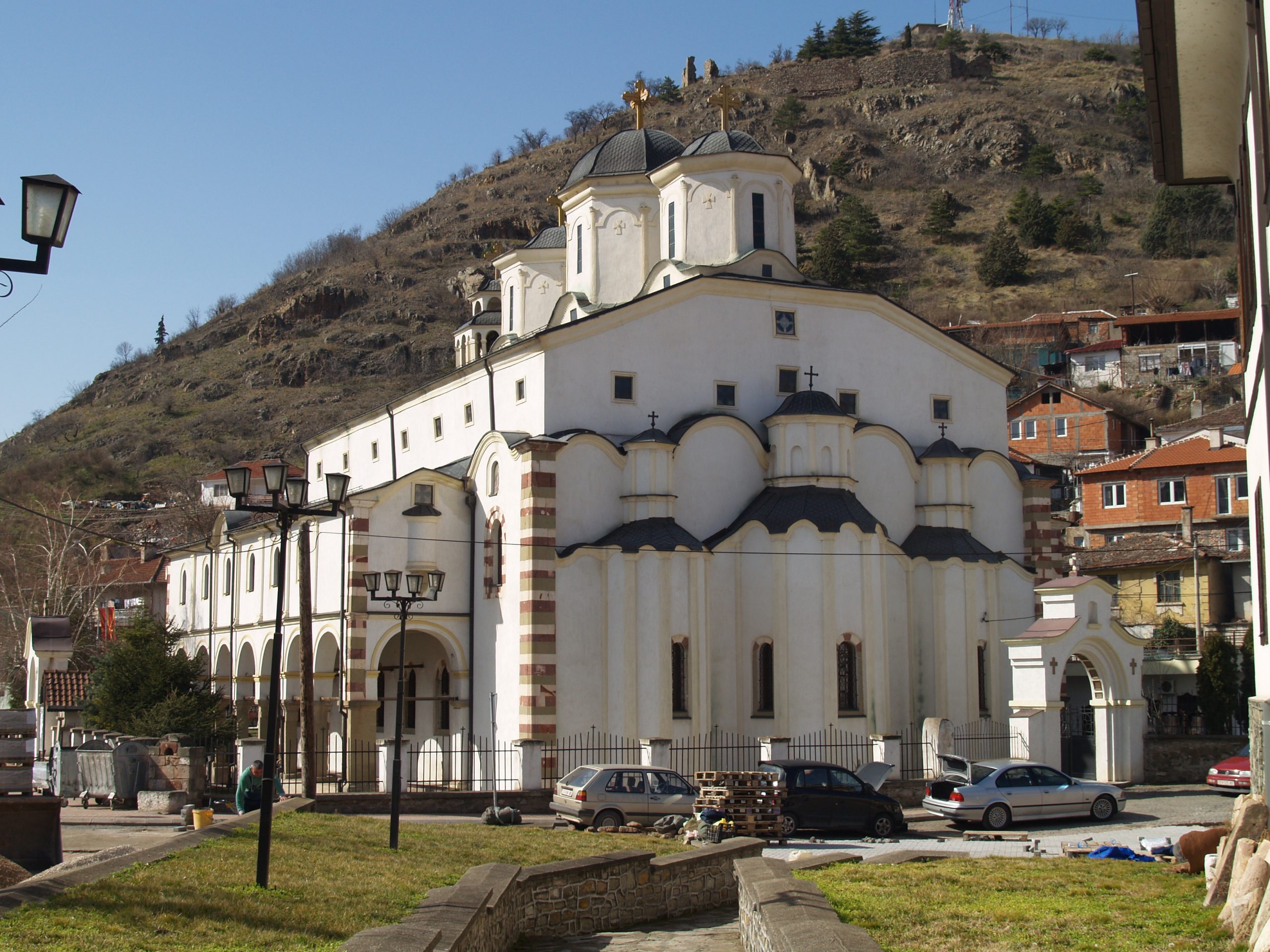
The Church of “St. Nikola” is located on the right side of the Otinja River, below the southern part of the medieval Isar Fortress. On the site of today’s church there once stood another church, mentioned in the literature as the “Gothic church,” built in 1341 and belonging to the Lesnovo Monastery. Car Dushan granted the Zletovo Bishopric, and in 1381 Konstantin Dejanovich donated it to Hilandar. There is no doubt that the church was located on the site of today’s church, dedicated to the same saint. The church as it exists today is a new building, renovated and erected in 1867 on the site of the old one, dedicated to the same saint—St. Nicholas.
The renovation/erection of the church is confirmed by the plaque built in above the main western entrance, whose text states that the church was built during the time of the Metropolitan of Kyustendil and Shtip, Ignatija, on 10 May 1867.
The church was built by the master builder Gjorgji Novakov Chongar, son of the renowned Debar master Novak Chongar. His building activity took place in the second half of the 19th century, and he built several churches in Macedonia, Serbia, and Bulgaria.
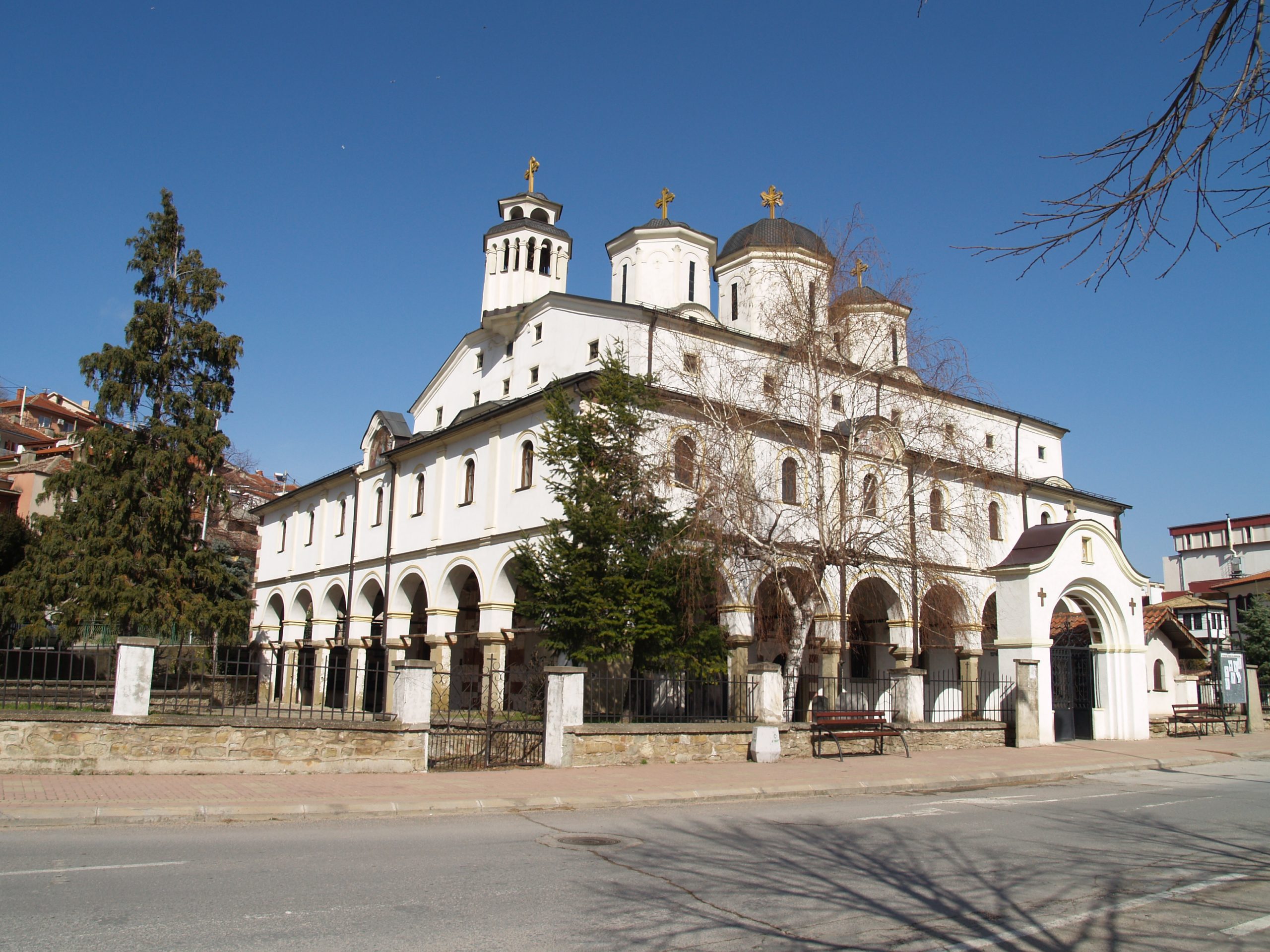
In plan, the church is a three-aisled basilica, surrounded by porches on the western, northern, and southern sides, which on the upper level continue as a gallery, where the women’s section is located. On the western side the gallery is on two levels. The central nave is emphasized and covered by three domes, and the side aisles by semi-cylindrical vaults. On the eastern side, the church ends with three polygonal apses. In construction, the side walls are massive, while the interior columns are wooden, clad in plaster. The vaulted structure, the domes, and the side semi-cylindrical vaults are built of brick, plastered, and painted.
The church is monumental and spacious, and in its interior and exterior appearance it is very similar to the church “Sv. Bogorodica” in Novo Selo, Shtip, built by Andreja Damjanov. The western portal is richly decorated: the door is carved, and above it, in sandstone, figurative and vegetal decoration is executed.
The interior of the church is decorated with painted vaults, fresco-icons, and a large iconostasis with icons made by the Macedonian zograf Dimitar Andonov Papradishki (1869), as well as frescoes in the altar area painted by zograf Kostadin Ivanov Vangelov from Shtip. The iconostasis and the baldachin were made by the Papradishki workshop, Andon Kitanov, while the bishop’s throne is the work of the well-known Mijak woodcarver Dimitar Stanishevv.
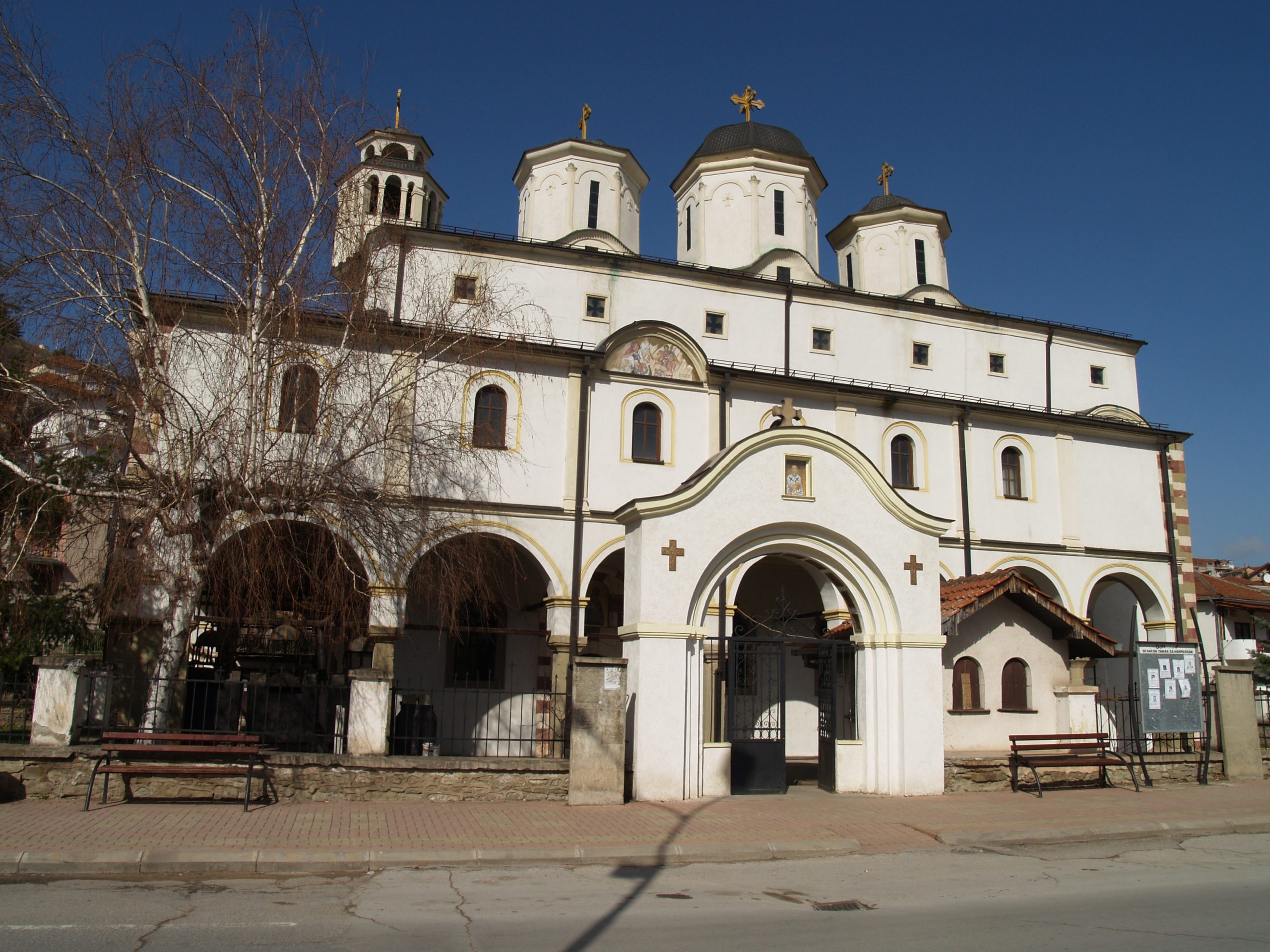
The space of the upper (gallery) level consists of three wings—north, south, and west—formed above the open porch of the church at ground level. The total area of the gallery is 270 m². The height from the floor to the ceiling is 2.90 m. The floor is wooden (“brodski”), laid over plank-and-beam joists resting on the massive walls of the porches. The ceilings are formed with a wooden beam structure, reed, and plaster. The northern and southern sections on the eastern side end with chapels, separated by wooden iconostases of identical construction. All three sections terminate at the east with colonnades of round columns, connected by arches of a light construction. The colonnade is enclosed with a wooden parapet made of a lattice wooden element. On the western side, the gallery space is expanded with five oval niches projecting outward. The gallery is lit by windows and is accessed via a wooden staircase set on a stone landing in the southwestern corner of the church. In 1990, the gallery space was converted into an exhibition display of icons and objects, and in 2007, following conservation interventions, the “Icon Gallery” was formed.
Constituent parts of the cultural property:
Iconostasis – with the following elements: carved Royal Doors, a northern and a southern door; a large cross with a painted Crucifixion of Christ and two additional Crucifixions (one north and one south) on the iconostasis; to the left and right of the cross there is a lamja (dragon) – a symbol of the victorious tree, on which the full-length icons of St. Bogorodica and St. Jovan are placed.
Icons – throne icons:
St. Prophet Elijah; St. Panteleimon; St. Archangel Gabriel; St. Athanasius; Nativity of Christ; St. Nicholas; St. Bogorodica with Christ; Jesus Christ; St. John the Forerunner; Transfiguration of Christ; Three Hierarchs; St. Archangel Michael; St. Spyridon; St. Simeon Stylite.
Icons for veneration (kissing icons):
St. Nedela; St. Panteleimon; St. Athanasius of Alexandria; Nativity of Christ; St. Nicholas the Wonderworker; St. Bogorodica with Christ; Jesus Christ; St. John the Forerunner; Transfiguration of Christ; Three Hierarchs; St. Spyridon the Wonderworker; St. Great Martyr George.
Small iconostasis icons: “Resurrection of Christ”, “St. Ignatius”, “St. Charalampius”, “St. Ephrem”, “St. Anthony”, “St. Basil the Great”, “Emperor Constantine and Empress Helena”, “Nativity of Christ”, “St. George”, “Dormition of the Holy Mother of God”, “Raising of Lazarus”, “Presentation of Christ in the Temple”, “Nativity of the Most Holy Mother of God”, “St. Apostle Peter”, “St. Evangelist John”, “Baptism of Christ”, “Transfiguration of Christ”, “Annunciation”, “St. Righteous Joseph”, “St. Joachim of Osogovo”, “St. Gabriel of Lesnovo”, “Holy Trinity”, “Beheading of St. John the Baptist”, “St. Paraskeva”, “St. Archdeacon Stephen”, “St. Barbara”, “St. Sava”, “St. Catherine”, “Entrance of the Mother of God into the Temple”, “Synaxis of the Twelve Apostles”, “St. Theodore Tyron”, “St. Arsenios”, “Holy Fathers”, “St. John of Rila”, “St. Apostle Simeon”, “St. Apostle Thomas”, “St. Prophet Elijah”, “St. Apostle James”, “St. Evangelist Luke”, “The Doubting of Thomas”, “St. Evangelist Matthew”, “St. Athanasius”, “St. Apostle Paul”, “St. John the Forerunner”, “St. Spyridon”, “St. Evangelist Mark”, “St. Apostle Philip”, “St. Apostle Andrew”, “St. Demetrius”, “St. Apostle Bartholomew”, “Sts. Cosmas and Damian”, “St. Panteleimon”, “St. John”, “Jesus Christ”, “Closed Doors”, “St. Simeon Stylite”.