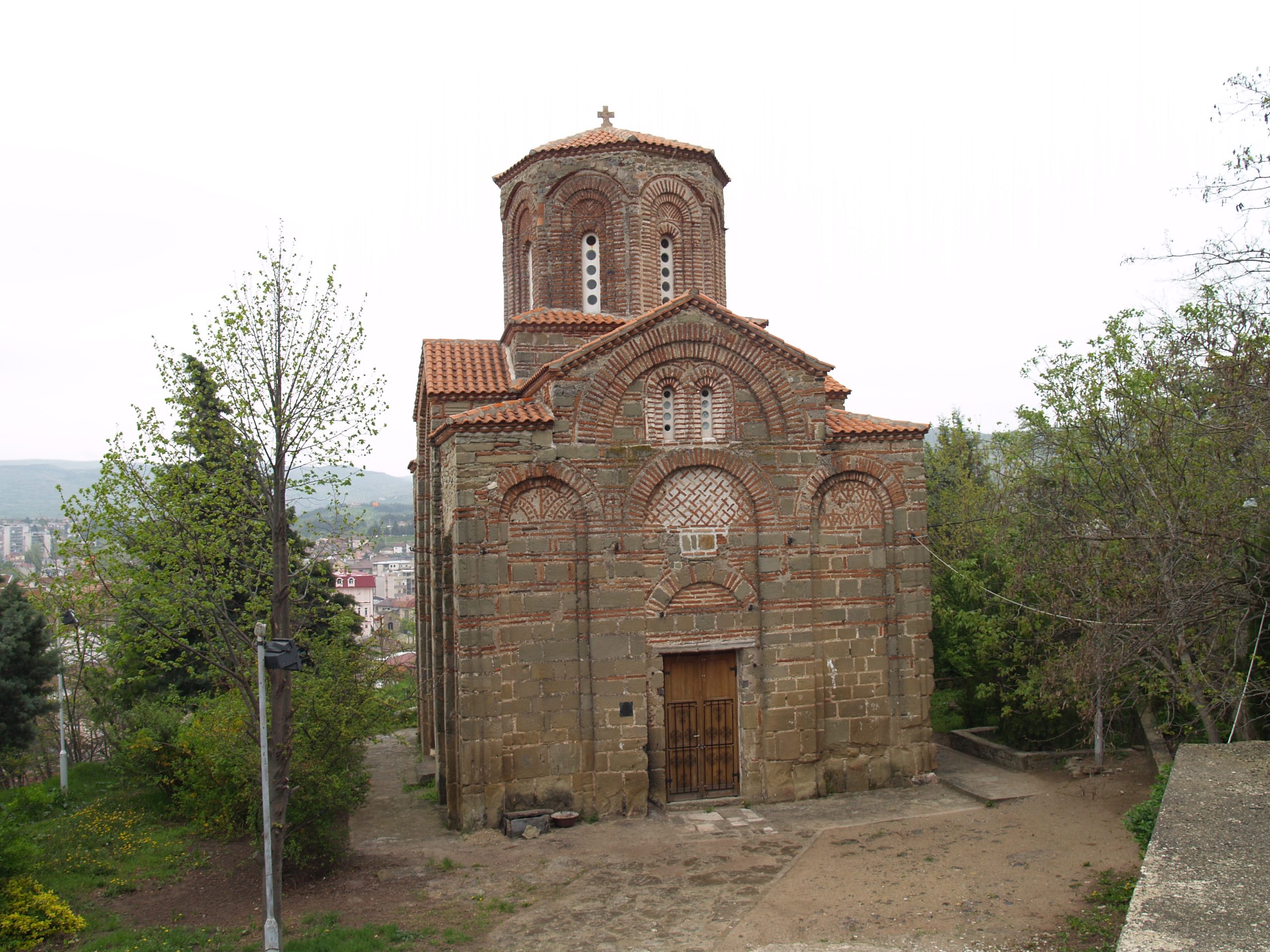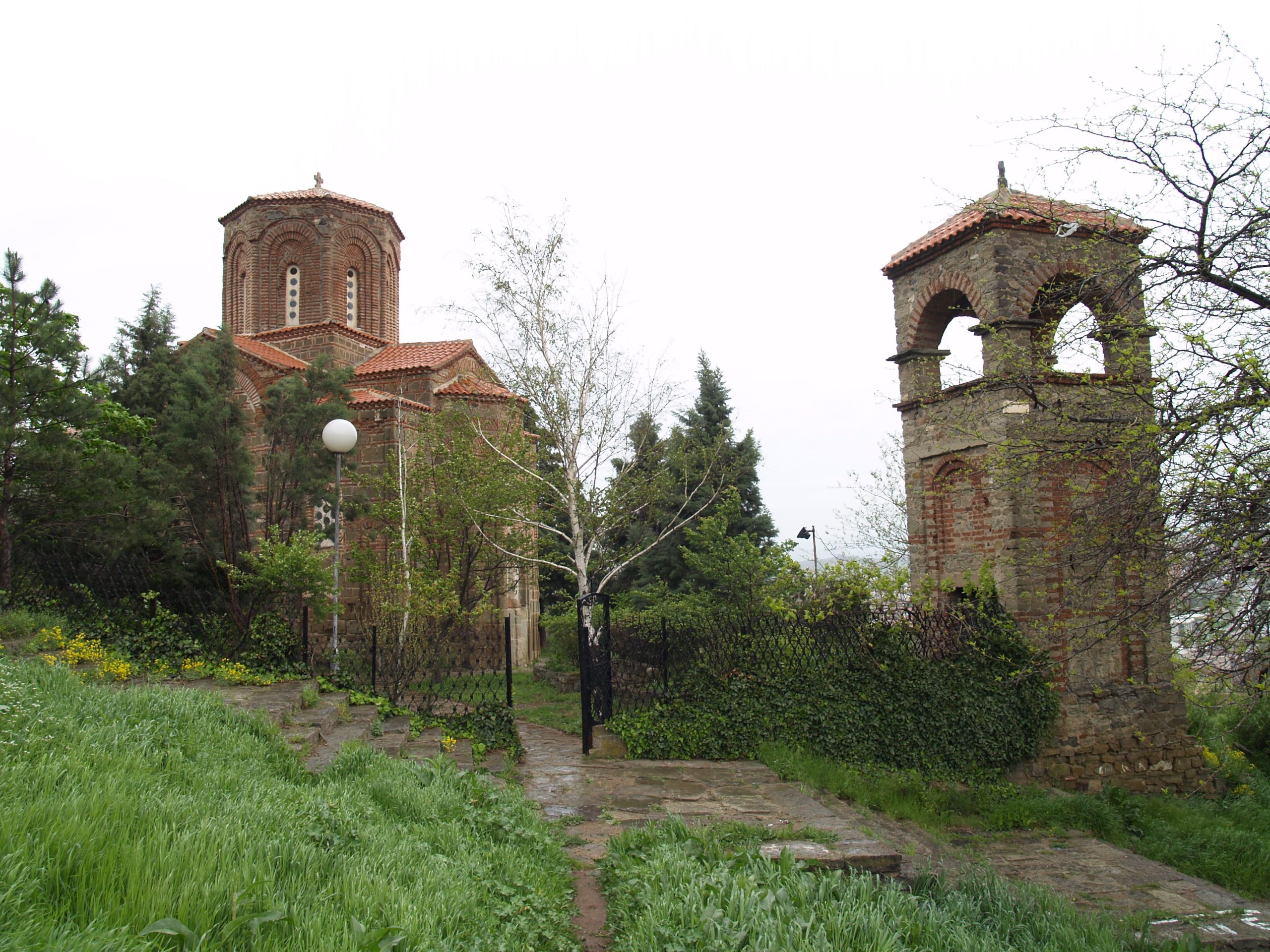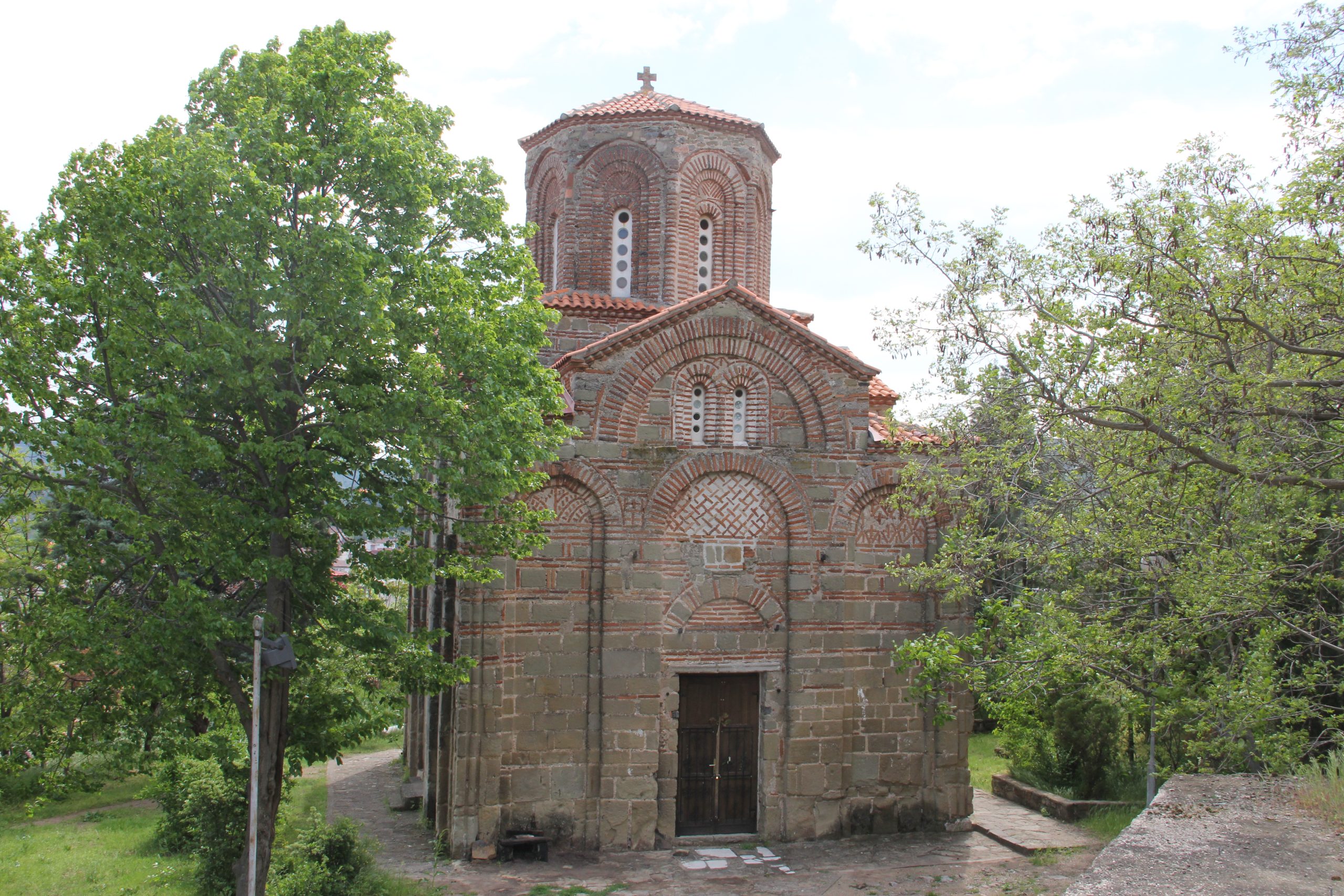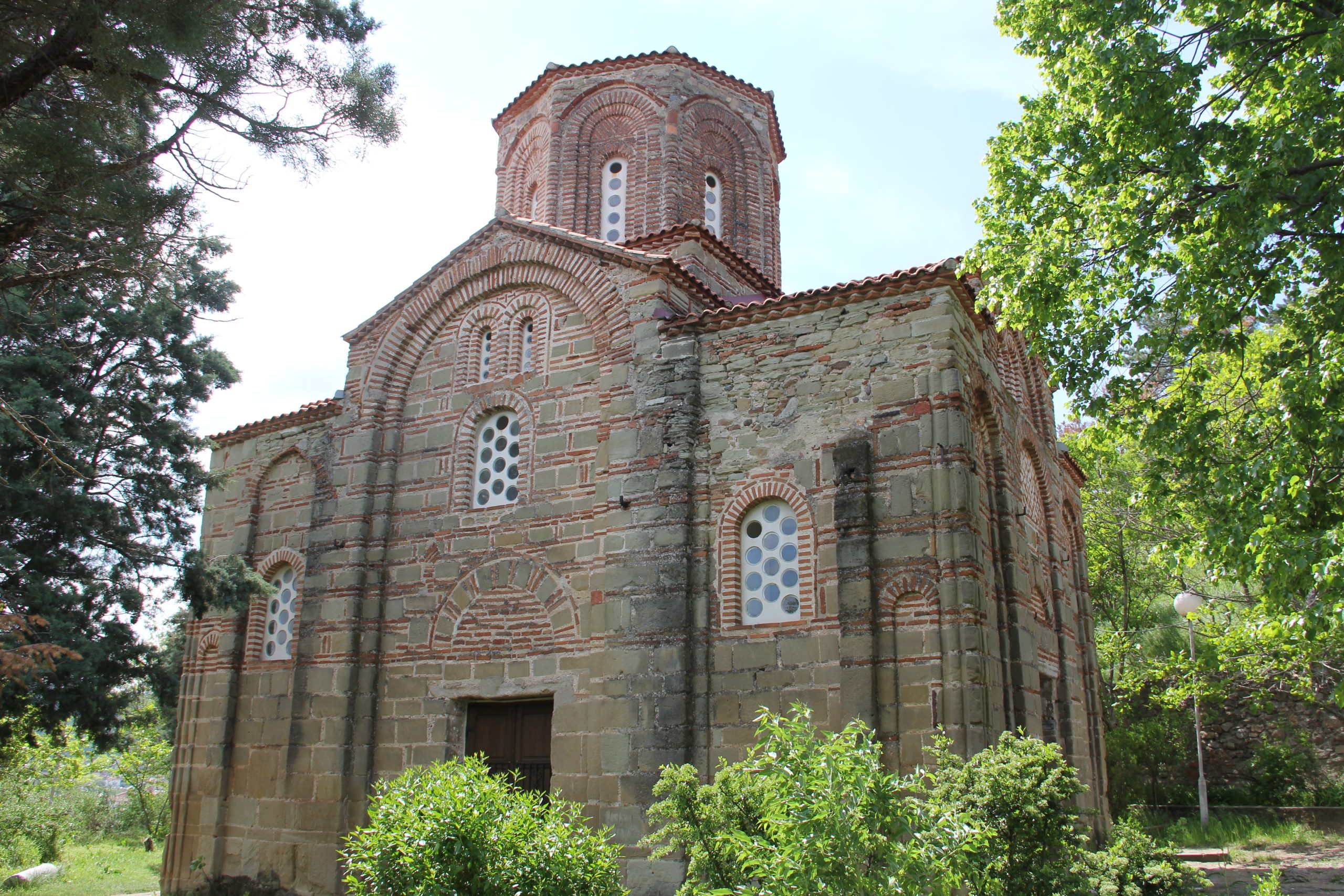
The church was built before 1332 beneath the Isar Fortress and is dedicated to St. Archangel Michael, one of the city’s principal protectors.
It is constructed of gray-green sandstone and brick, with refined architectural forms and painted facades. In plan, it is a cruciform church with a polygonal apse, measuring 13.30 × 8.40 m, with a single dome and a porch (narthex) added later, which at the beginning of the 20th century was demolished.
The load-bearing structure consists of two longitudinal and two transverse walls, 120 cm thick, and four columns that support the dome.
No wall painting is preserved inside the church; it is assumed that it was destroyed during Ottoman rule, when the church was converted into a mosque. This is suggested by the travel notes of Evliya Chelebi, who, passing through Shtip in 1661, mentions the mosques, indicating that the “fetih” mosque—i.e., the mosque beneath the Isar Fortress—was originally a church, which Ali Bey converted into a mosque.
Constituent parts of the cultural property:
Inside the church there are four throne icons registered by the Republic Institute for the Protection of Cultural Monuments (according to record No. 0801-27 of 3.06.1985, Shtip), as follows:
St. Bogorodica SK-18377
Jesus Christ SK-18380
St. Archangel Michael SK-18383
St. Jovan the Baptist SK-18387
Bell tower in the church yard.