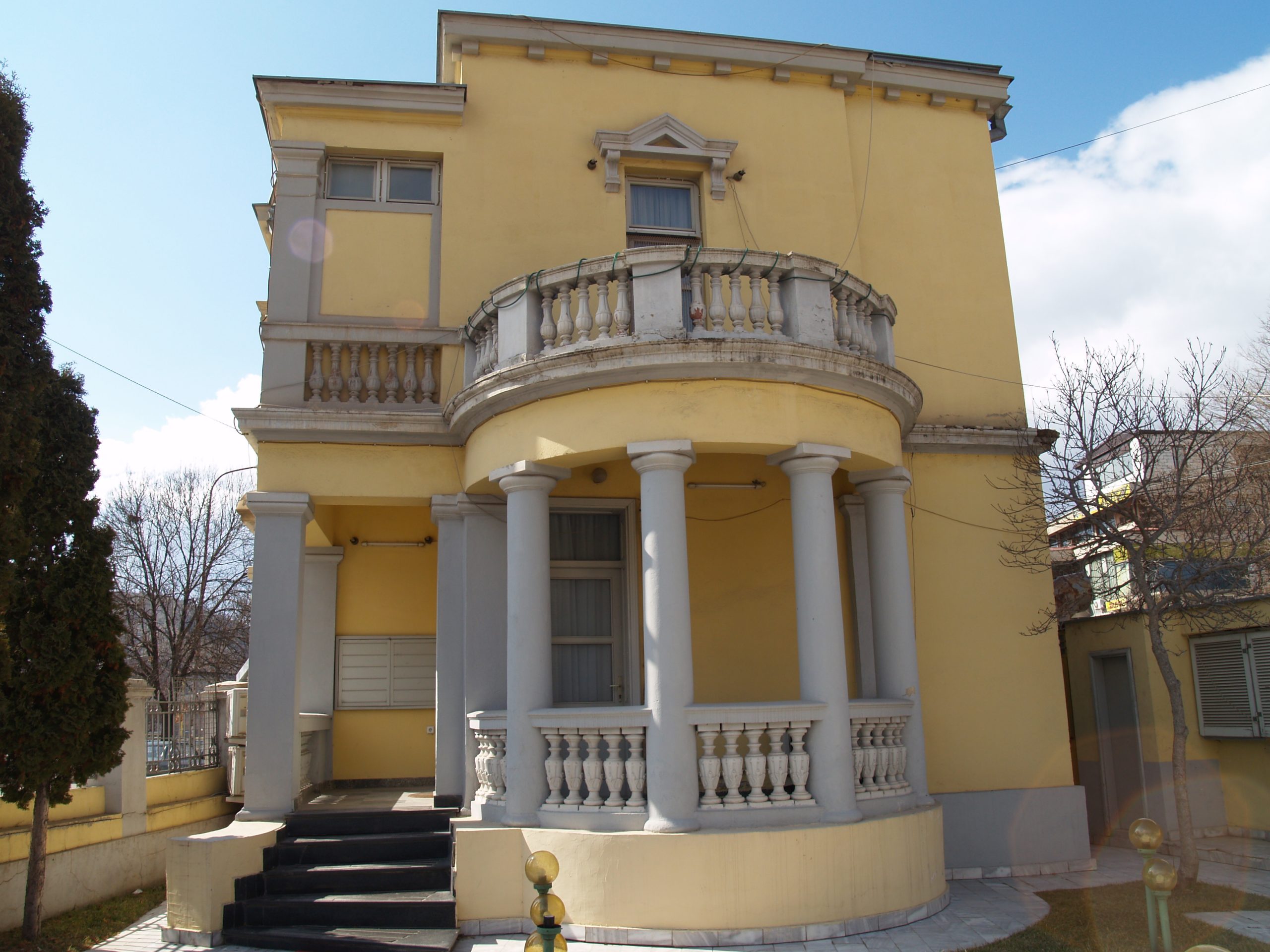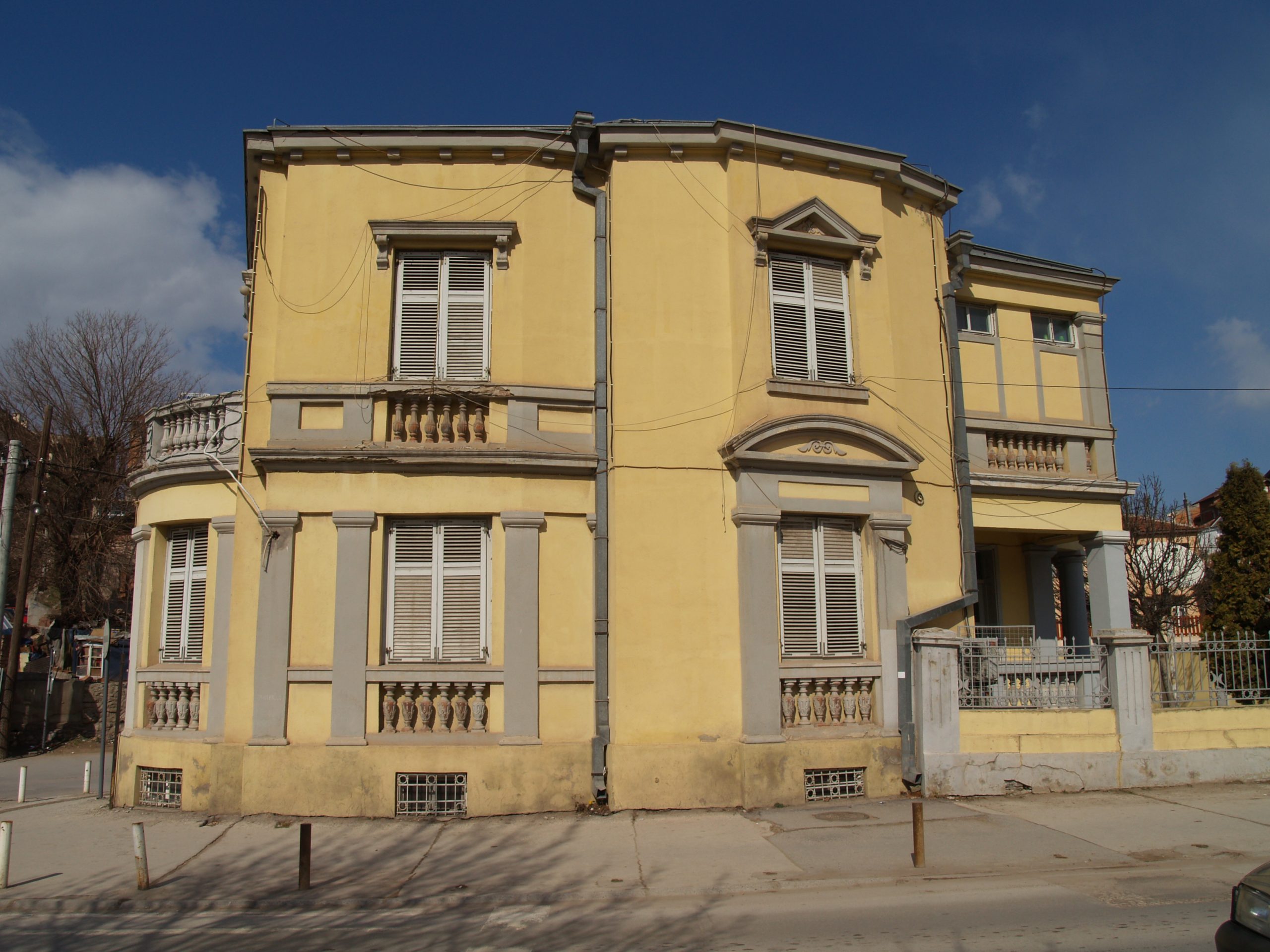
The building represents a family house in a classical style from the third decade of the 20th century, featuring a semi-basement, ground floor, and one upper floor. Originally built as a family home, for a long period it functioned as Hotel Garni, although in recent years it has been abandoned and out of use. Based on the architectural design features, it is believed to have been built according to a project by an architect, making it a representative building compared to others in the immediate surroundings. The building has a characteristic shape on its western side with emphasized symmetry. The main façade faces the Otinja River, while the entrance is from the east through a courtyard accessed via a gate located on the boundary wall.
The building is constructed from solid materials, using fired brick, with articulated façades. The ground floor is elevated by three stone steps above the semi-basement entrance. A semi-circular terrace is positioned at the entrance, with an open balcony above supported by four circular columns. The railing of the third balcony is decorated with ornamental ceramic elements.
The window openings are of the same dimensions and are double-winged on both levels. On the ground floor, the windows are framed with decorative pilaster-like elements that articulate the fasade. The roof structure is also dynamic, taking shape based on the building’s foundation. Notable are the interesting profiles placed beneath the roof eaves.
Hotel Garni represents a symbol of the city of Shtip.