Monument to the Jews
In the past, Shtip was home to many Jewish families. The settlement of Jews in the city of Shtip began in 1498. According to a summary Ottoman census (defter) from 1512, 38 Jewish families from Thessaloniki lived in Shtip. In 1899, the Jewish community reached its peak of around 800 people. This number gradually declined until the Second World War, when about 140 Jewish families still lived in Shtip.
The Jews in Shtip lived in a relatively small and compact urban area, in the very center of the city. Jewish houses were typically built with a ground floor and an upper floor. A large number of them were concentrated in the area of today’s city square, or the Cultural Center “Aco Shopov.” This part of the city was known as the Jewish Quarter. Here, they had their own institutions, synagogue, and school. One of the gathering places for the Jews of Shtip was the Jewish club, where meetings, celebrations, books, and other Jewish publications were held. Among the cultural and educational activities, special emphasis was placed on amateur drama groups of Jewish youth. In Shtip, in 1929, a Jewish youth club was established under the name “Hakohav,” within which a Jewish youth football club also operated. In the period 1937–1938, another society, “Hashomer Hatzair,” was formed, bringing together Jewish youth in the city. The life of the Jewish population, as well as that of the entire Macedonian population, changed after April 6, 1941, especially following the Bulgarian occupation.
The deliberate physical destruction of European Jewry during the Second World War was an expression of Adolf Hitler’s violent ambition to build a “Thousand-Year German Reich.”
On the night between March 10 and 11, 1943, the cities of Shtip, Skopje, and Bitola were blocked by the Bulgarian army and police. On March 11 at four in the morning, all the Jews of Shtip, men, women, and children—were gathered, initially taken to the local barracks, and then transferred to a temporary camp in Monopol in Skopje. The deportation of Jews from Macedonia to the Treblinka camp in Poland, via Monopol in Skopje, was organized by the German and Bulgarian fascist authorities in three transports. In the second transport, which departed on March 25, over 7,000 Jews traveled, including all the Jews from Bitola. They arrived in Treblinka on March 31, 1943, at 18:30. All Jews from Macedonia were deported to the Treblinka camp in Poland, which at the time was under German occupation, where they were killed in gas chambers. From Treblinka, no one returned—there were no surviving witnesses to testify about the horrors of the destruction of the Jewish population of Macedonia.
In the second half of September 1943, Treblinka ceased to exist. The gas chambers were destroyed, the barbed wire removed, and the site of the mass killings was burned. Houses and farms were later built over it, along with cultivated fields, in an attempt to conceal the crime.
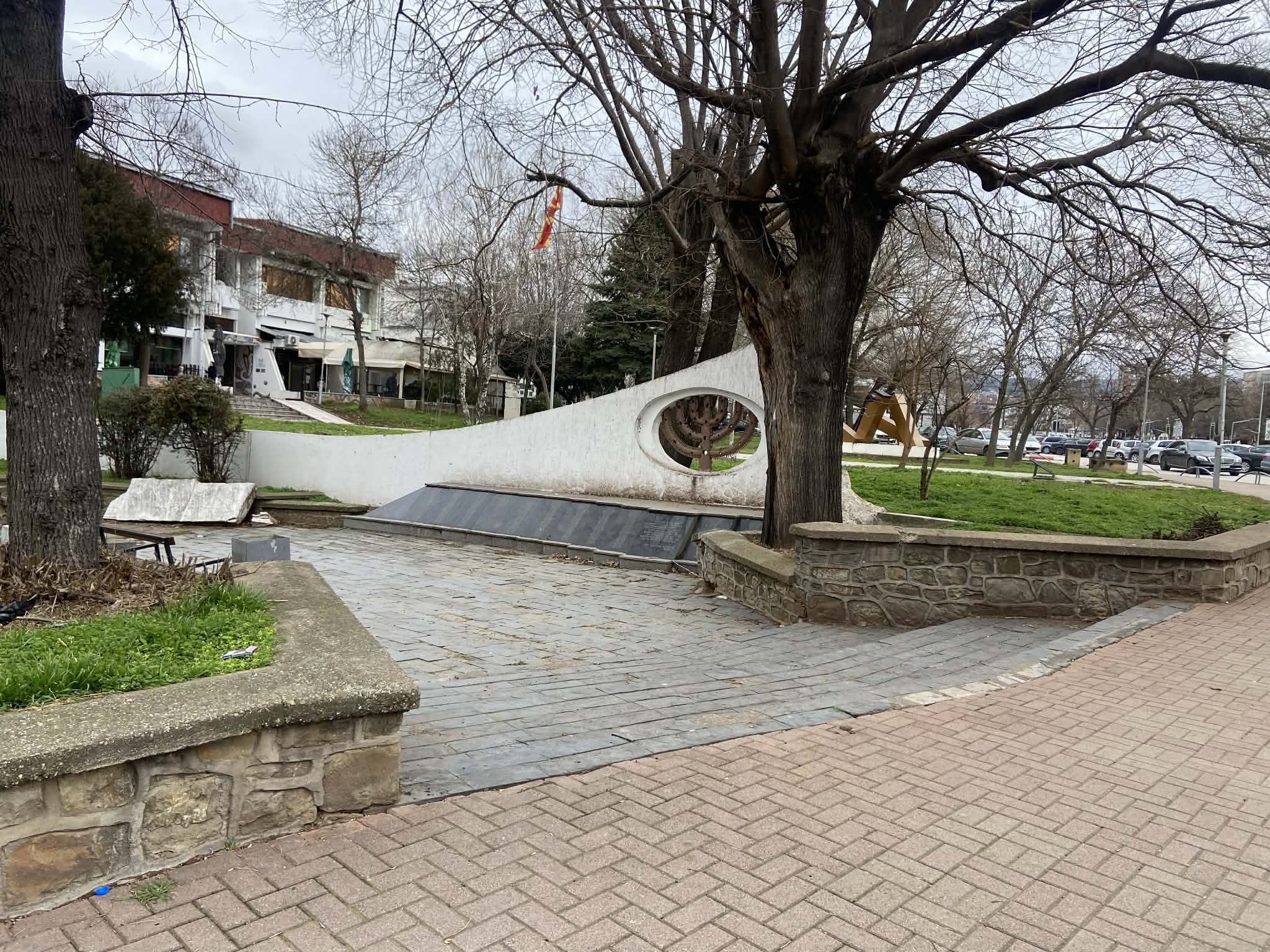
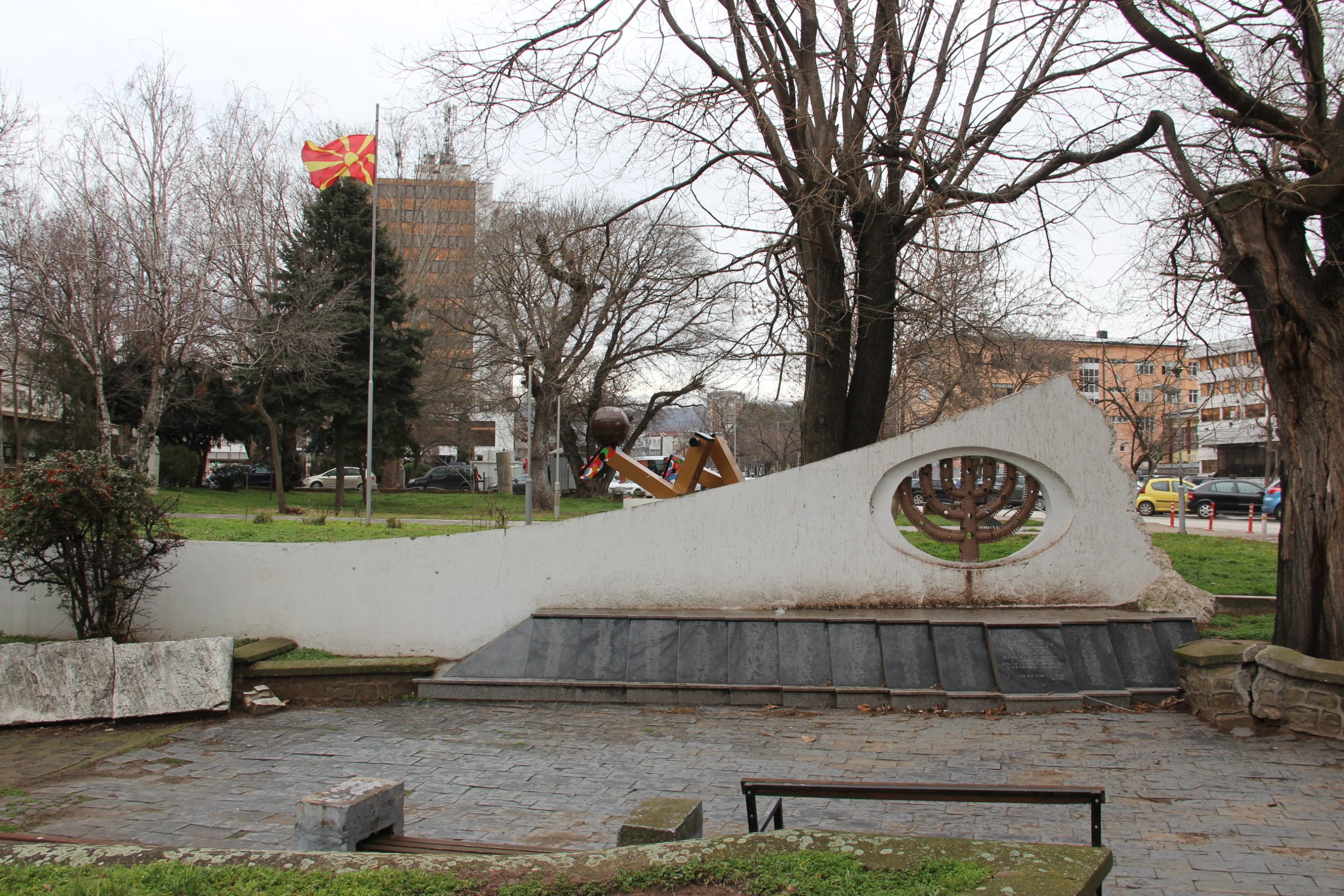
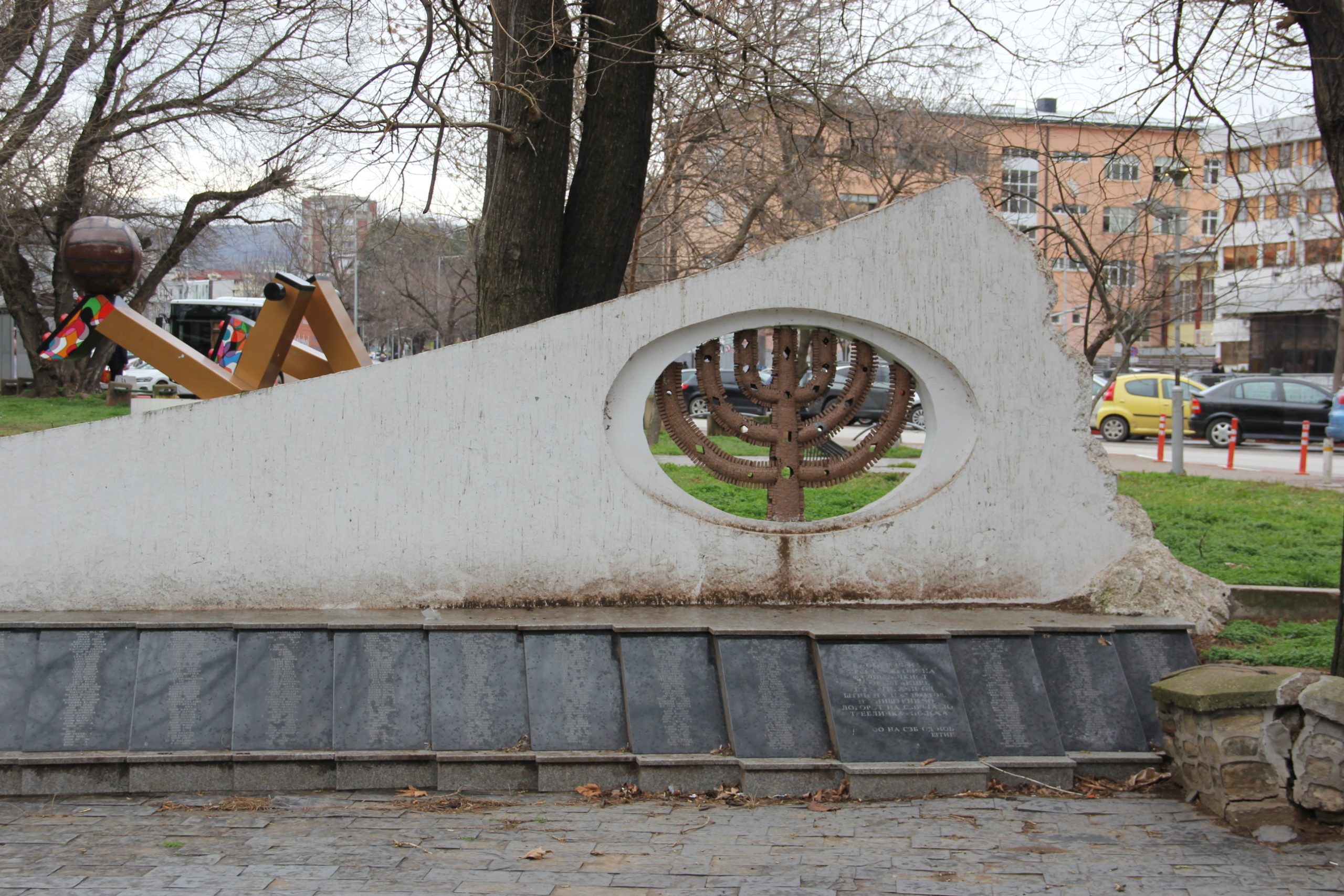
In honor of the deported Jews from Shtip, a monument was erected in 1985 in the city center, on the site of the former Jewish quarter, created by artist Metodi Andonov. The monument symbolizes the lives of the Jews that were tragically cut short in March 1943. The names of all Shtip Jews who were deported and killed in Treblinka are inscribed on the monument.